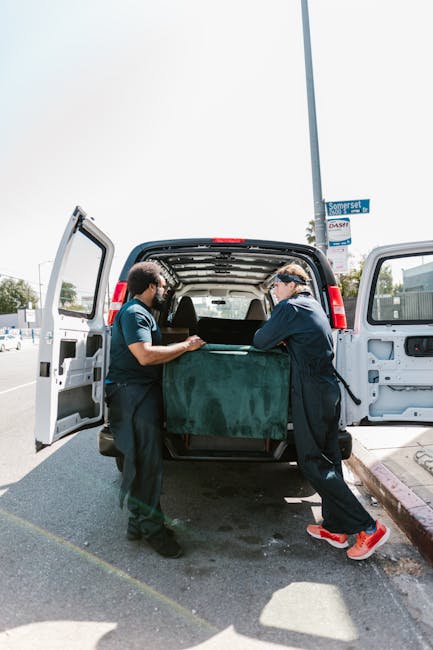
Hackney Council van permits and removals rules explained

If you are moving house, delivering furniture, or arranging a business relocation in Hackney, the last thing you want is a parking problem turning into a stressful, expensive delay. That is exactly why Hackney Council van permits and removals rules explained matters. The rules around loading, parking, bay suspensions, timed restrictions, and vehicle access can affect even a fairly simple move. Miss one detail and you could end up circling the street with a van full of boxes while the clock ticks on. Not ideal, to be fair.
This guide breaks everything down in plain English: what the council rules are trying to achieve, how they affect removal vans and man-and-van jobs, what to check before moving day, and how to avoid the common mistakes that catch people out. If you are booking a moving service, you may also want to look at man with van, home moves, or office removals depending on the type of move you are planning.
There is no magic shortcut here. The smart move is usually simple: understand the street, understand the vehicle, and plan the move around the local restrictions rather than hoping for the best. Sounds obvious. Still, you would be surprised how often people leave it until the morning of the move.
- Why it matters
- How it works
- Key benefits and practical advantages
- Who this is for
- Step-by-step guidance
- Expert tips
- Common mistakes to avoid
- Tools, resources and recommendations
- Law, compliance and best practice
- Options and comparison
- Case study or real-world example
- Practical checklist
- Conclusion
- Frequently asked questions
Why Hackney Council van permits and removals rules explained matters
Hackney is busy, tightly parked, and full of streets where loading space disappears in seconds. That alone makes removals more complicated than in a suburban area with wide drives and spare kerb space. If your van cannot stop where you expected, the whole move slows down. Furniture gets carried further. Neighbours get annoyed. The crew gets tired. And your invoice can creep up if the job takes longer than planned.
These rules matter because councils do not manage roads just to be difficult. They are balancing access, safety, congestion, resident parking, commercial loading, bus routes, cycle lanes, and day-to-day traffic flow. In practical terms, that means your moving day needs to fit around local restrictions, not fight them.
For a lot of people, the first sign of trouble is a simple question: can the van park outside the property? Sometimes yes. Often not. And in some streets, the answer changes by the hour. That is where proper planning makes the difference between a calm move and a near-comedy of errors with a sofa stuck in the doorway. We have all seen that sort of thing happen.
It is also worth remembering that removal jobs are often time-sensitive. A flat handover, an office lease deadline, or a school run all compress the schedule. A loading delay of even 20 minutes can ripple through the rest of the day. So, understanding the local parking and permit side of removals is not a nice extra; it is part of getting the move done properly.
How Hackney Council van permits and removals rules explained works
In simple terms, removals in Hackney are shaped by two things: where the van can stop and whether any restrictions apply at that time. The exact setup depends on the street, the type of bay, and whether the vehicle is waiting, loading, or staying longer than expected.
Here is the practical reality. A removal van may be able to use a loading area briefly, but not every bay is for every purpose. Some spaces are residents-only. Some are pay-and-display. Some have loading-only times. Some roads have yellow line restrictions that still allow loading in certain circumstances, while others do not make that straightforward. Then there may be suspended bays, controlled parking zones, or event-day restrictions layered on top. It can get messy quickly.
If you are moving a few boxes and a small sofa, a compact vehicle may be enough to minimise parking trouble. If you are moving a whole property, the vehicle size, loading time, and route matter far more. That is why many people choose a service like man and van removals or book a larger removal van when the job needs more capacity.
There is a useful distinction here:
- Parking permission means the vehicle is allowed to be in that place.
- Loading allowance means the vehicle may be able to stop temporarily for genuine loading or unloading.
- Permit or suspension may be needed where the vehicle needs to stay longer, block a bay, or use a restricted space for removals.
In real life, removals teams usually work by checking the property location, the local restrictions, the size of the vehicle, and the amount of carrying distance. A fifth-floor walk-up with no lift? That changes the game. A terraced house on a narrow street? Same story. Hackney is one of those places where the street itself can be the main challenge.
Key benefits and practical advantages
Getting the local rules right brings more than just peace of mind. It has a direct effect on the speed, cost, and overall smoothness of the move.
- Less risk of delay: the van can get as close as legally possible to the property.
- Lower carrying distance: fewer metres between van and front door means less fatigue and less breakage risk.
- Better cost control: when the move is faster, the job is easier to price accurately.
- Reduced stress: nobody wants to do a back-and-forth dash in the rain because the only legal space is two streets away.
- Cleaner handover: landlords, agents, and neighbours are less likely to complain when the move is handled considerately.
There is also a quiet benefit people do not always think about: the move tends to feel more organised. Once the parking side is sorted, everything else gets simpler. Boxes come out in order. People know where to stand. The driver is not improvising. Even the noise of the day feels less chaotic.
For businesses, the advantage is even more obvious. If you are relocating stock, equipment, or office furniture, the right planning can keep downtime down. That is one reason commercial customers often look at commercial moves alongside local access and parking requirements. The fewer surprises, the better.
Who this is for and when it makes sense
This topic matters to a fairly wide group of people. If any of the following sounds familiar, you are in the right place:
- Tenants moving into or out of a flat in Hackney
- Homeowners moving bulky furniture or full household contents
- Students or sharers moving between small properties
- Landlords arranging a clear-out or furniture collection
- Offices relocating files, desks, monitors, or stock
- Anyone hiring a van and wondering whether the street will actually work on the day
It also makes sense if you are simply not sure how much vehicle access your property has. Some people assume the street outside is fine because it looks okay at lunchtime. Then moving day arrives at 8am, the bay is full, and the bin lorry is squeezing through. Different picture entirely.
If you only have a few items, you may get by with a smaller vehicle and a quick loading plan. If you are moving wardrobes, beds, white goods, or office furniture, you should think in terms of route planning, legal stopping points, and a realistic loading window. In those cases, services like furniture pick up or house removals may be more suitable than a simple ad-hoc lift.
Truth be told, if you are already wondering whether you need a permit, you probably do need to check. That instinct is usually right.
Step-by-step guidance
Use this as a practical moving-day framework. It is not glamorous, but it works.
- Check your exact address and street layout. Look at whether your property sits on a main road, side street, cul-de-sac, estate road, or restricted bay area.
- Identify the vehicle size you actually need. A smaller van is easier to place; a larger van is often more efficient for volume. Choosing the wrong size is a classic headache.
- Work out whether loading will be quick or slow. A few bags is one thing. A full family house is another.
- Check parking and stopping restrictions for the time of day. Morning, school-run hours, and weekday daytime often feel very different from Sunday morning.
- Plan for the loading point. Decide where items will come out, where the van can stand, and who will guide the driver if the space is tight.
- Prepare the property early. Boxes stacked, doors open, fragile items marked, and larger pieces disassembled if needed.
- Keep a backup plan. If the closest space is blocked, know the second-best option before the crew arrives.
A small, ordinary example: a two-bedroom flat near a narrow residential street might need a compact van, early arrival, and a short loading plan to avoid overstaying at the kerb. By contrast, a first-floor office with bulky desks may need more time, more hands, and a better loading location. Same borough, completely different rhythm.
If the move feels bigger than you first expected, that is normal. It happens all the time. Boxes multiply. Drawers contain random bits. Someone suddenly remembers the bike in the shed. The key is not panic; it is sequence.
Expert tips for better results
After plenty of moving days, one thing becomes clear: the best removals in Hackney are usually the ones that are planned a little too carefully. That is not a bad thing.
- Book the moving time around local traffic, not just your own schedule. A good-looking hour on paper may be a terrible hour on the road.
- Use the smallest vehicle that still fits the job. Oversized vans create parking stress and can make access harder in tight streets.
- Label boxes by room, not just by item type. It speeds up unloading and reduces standing around in the hallway.
- Pre-pack fragile or high-value items separately. That helps the crew move them with proper care.
- Keep a clear path from front door to van. In a narrow stairwell, even one abandoned laundry basket becomes annoying very quickly.
- Consider whether loading help is needed. Two people may be fine for a small move, but not for a full house or office.
Another useful trick is to think in terms of bottlenecks. Where will the process slow down? Is it stairs? A narrow road? Waiting for keys? Lift access? Once you identify the bottleneck, you can manage the job around it.
If your move includes dismantling, wrapping, or sorting, it may be worth looking at packing and unpacking services. That sort of support can save a surprising amount of time, especially when the day already feels busy.
And yes, a kettle in the right place still helps. Some truths are universal.
Common mistakes to avoid
A lot of moving problems come from a handful of repeat mistakes. Most are avoidable if you know what to watch for.
- Assuming the street space will be free. It might be. It might not. On a weekday, probably not.
- Choosing the wrong vehicle. Too small and you do extra trips; too big and access becomes awkward.
- Ignoring timed restrictions. Loading may be allowed at one time and restricted at another.
- Leaving booking too late. Last-minute arrangements are where permit issues and availability problems start to overlap.
- Not measuring bulky items. Wardrobes and sofas are famous for being bigger than memory says they are.
- Forgetting building rules. Flats, estates, and offices can have their own access conditions, which matter just as much as the street outside.
Another common one: people think the moving team will sort out every access issue automatically. A good team will help, of course, but they still need accurate information. If the van has to park two roads away because the nearest bay is full, that is not a minor detail. That is the job.
Also, do not underestimate weather. Rain makes carrying slower, floors slippier, and loading more awkward. A damp cardboard box in a Hackney drizzle does not sound like much. It is, though.
Tools, resources and recommendations
You do not need a suitcase full of special equipment to manage a move well, but a few practical tools do make life easier.
- Measuring tape: useful for furniture, hallways, stair turns, and van loading space.
- Box labels or marker pens: simple, cheap, and surprisingly powerful.
- Furniture blankets and straps: help protect items during loading and transport.
- Phone notes or a checklist: good for tracking keys, meter readings, and final room checks.
- Photos of parking restrictions or street signs: handy when planning the loading point.
From a service perspective, it can help to compare what kind of move you are booking. A smaller local job may suit a basic man with a van approach, while a larger family property or office project may need a more structured removal company style service.
If you are trying to keep the move efficient, ask about:
- Vehicle size and loading capacity
- How access issues are handled
- Whether wrapping and packing help is available
- How delays or waiting time are managed
- Whether the crew is insured and trained for heavy items
It is also sensible to review the provider's approach to safety and responsibility. Pages such as health and safety policy, insurance and safety, and terms and conditions can help you understand how the business works and what standards it follows.
Law, compliance, standards, or best practice
When removals involve public roads, parking bays, loading restrictions, or commercial vehicles, compliance is not just a box-ticking exercise. You need to follow the local parking rules, keep within the terms of any permit or loading allowance, and avoid causing obstruction. The exact details can vary depending on the street and the council's current arrangements, so it is always better to verify before moving day rather than relying on memory or guesswork.
Best practice in Hackney usually means:
- Checking local restrictions before confirming arrival time
- Using only genuine loading activity when stopping in restricted areas
- Avoiding blocked driveways, crossings, and unsafe stopping positions
- Keeping communication open between driver, movers, and the person at the property
- Making sure the move does not create unnecessary risk for pedestrians, cyclists, or neighbours
If your move is commercial, there may be extra planning to consider around access windows, building management rules, and business continuity. That is where office relocation services and office removals can be especially useful, because they are usually built around tighter schedules and more structured logistics.
One thing people sometimes overlook is the difference between what is technically possible and what is sensible. A van might squeeze into a space, but if it blocks sightlines, slows traffic, or makes unloading awkward, it is probably not the best option. Safe, clean access usually beats a clever workaround.
Options, methods, or comparison table
If you are deciding how to handle a Hackney move, it helps to compare the common approaches side by side.
| Option | Best for | Strengths | Watch-outs |
|---|---|---|---|
| Small man-and-van job | Few items, light furniture, short local moves | Easy to manoeuvre, often quicker to load in tight streets | Limited capacity, may need extra trips |
| Standard removal van | Flat moves, typical household removals | Balanced capacity and access, practical for most homes | Can be harder to place on narrow roads |
| Full removal service | Large homes, offices, bulky or fragile loads | More hands, better organisation, reduced stress | Needs more planning and clearer access arrangements |
There is no single best choice for everyone. A small flat on a busy road may actually be easier with a compact vehicle and an efficient team. A larger property with lots of stairs might justify a fuller service even if the street is awkward. The right answer is the one that fits both the load and the access.
If you are unsure, it may help to compare man and van, removals, and removals near me options before you book. Matching the service to the street is half the battle.
Case study or real-world example
Here is a realistic local scenario. A couple moving from a third-floor flat in Hackney had booked a van for late morning because it seemed convenient. On the day, the immediate outside space was occupied, the nearest bay was timed, and the building entrance had a shared path that made trolley use awkward. Nothing dramatic. Just lots of little friction points.
Instead of forcing the schedule, they adjusted the plan early. The driver arrived slightly sooner, parked in the best available legal spot, and the crew began carrying smaller loads in a steady flow. They had already labelled boxes by room, and the heavier furniture had been measured in advance so it would fit the van layout. The move still took effort, of course, but it stayed controlled. No one was rushing. No one was stuck waiting for a miracle parking space.
That sort of move is common in Hackney. The property itself is often fine. It is the access that needs attention. Once you accept that, the whole thing becomes much more manageable.
In another example, a small shop relocation worked better because the business owner chose a service with a vehicle that could load efficiently without dominating the street. The team used a clear arrival window, kept the loading point simple, and made sure the inventory was ready at the door. A tidy process. No drama. Which, in removals, is basically gold.
Practical checklist
Use this checklist a day or two before the move. Better still, do it earlier if you can.
- Confirm the moving date, time, and arrival window
- Check the street for parking, loading, and waiting restrictions
- Measure large furniture and stair turns
- Choose the right van size for the job
- Confirm whether any permit, bay suspension, or access arrangement is needed
- Tell the mover about lifts, stairs, shared entrances, and gated access
- Pack fragile items separately and label boxes clearly
- Keep keys, documents, and meter readings together
- Clear hallways, porches, and walkways
- Have a backup parking plan in case the nearest space is occupied
- Review insurance, safety, and booking terms before moving day
Expert summary: In Hackney, the smartest removals are usually the ones that respect the street as much as the property. If the access plan is solid, the rest of the day becomes much easier.
If you are still weighing up the right approach, it can help to speak with a provider that understands local moving conditions and can keep things straightforward from the start. That tends to save time, money, and a bit of sanity too.
Get a free quote today and see how much you can save.
Conclusion
Hackney Council van permits and removals rules explained really comes down to one principle: plan the move around access, not the other way round. Once you understand where the van can stop, how long it can stay, and what the street will realistically allow, the whole process gets calmer and far more predictable.
Whether you are moving a one-bed flat, a family home, or an office, the difference between a smooth move and a stressful one is often just a few practical decisions made early. Pick the right vehicle. Check the restrictions. Tell the mover what the property is really like. Easy to say, sometimes slightly fiddly to do, but absolutely worth it.
And when it all comes together on moving day, there is a genuine relief in that moment when the last box is out, the van door shuts, and the street finally feels quiet again. Nice feeling, that.
Frequently Asked Questions
Do I need a permit for a removals van in Hackney?
Sometimes, yes, but it depends on the exact street, the time of day, and how the vehicle will be parked or loaded. The safest approach is to check the local restrictions before moving day rather than assuming the van can stop outside the property.
Can a removals van stop on yellow lines in Hackney?
Not automatically. Loading may be possible in some situations, but the rules are location-specific and time-sensitive. You should never assume yellow lines are fine just because you are unloading. Check the actual street conditions first.
What is the difference between loading and parking?
Loading is a temporary stop to move goods in or out of a property. Parking usually means the vehicle is left in place for longer. Councils treat those differently, so the reason for stopping matters a lot.
How far in advance should I plan a move in Hackney?
As early as you reasonably can. A few days is often enough for a simple move, but tighter streets, larger loads, or commercial relocations benefit from more notice. Early planning gives you room to deal with access issues calmly.
What size van is best for a flat move in Hackney?
That depends on the amount of furniture and how easy the street is to access. A smaller van may suit tight roads and a light load, while a standard removal van is better for fuller flat moves. Size should match both volume and access.
What happens if the closest parking space is taken on the day?
You usually need a backup plan. That might mean using a nearby legal space, adjusting the loading route, or waiting briefly while the mover positions the vehicle safely. A good moving plan always includes a second option.
Are office moves treated differently from home removals?
Often, yes. Office moves may involve building rules, access windows, delivery bays, and tighter timing. If you are moving business equipment or stock, it is worth planning the logistics more carefully and considering office removals.
Can I just use a small van to avoid permit issues?
Sometimes a smaller vehicle makes access easier, but it does not remove the need to follow parking and loading rules. It can help with manoeuvrability, though, especially on narrow Hackney streets.
What should I tell the removals team before moving day?
Tell them about the street, parking restrictions, stairs, lifts, property access, bulky items, and any timing constraints. The more accurate the brief, the smoother the day tends to go.
Is it better to book a man and van or a full removals service?
If you have a smaller load and straightforward access, a man and van option may be enough. If the property is large, the access is awkward, or you want more help with loading and organisation, a fuller removal service is usually the safer choice.
What are the most common mistakes people make with removals in Hackney?
The biggest ones are leaving parking checks too late, choosing the wrong van size, and underestimating how long loading will take. Those three issues cause more stress than anything else, honestly.
Where can I get help with a local move?
If you want help planning a move or choosing the right service for the job, start with removal services or a local moving option that matches your load and access needs. The right support makes a big difference, especially in a busy borough like Hackney.